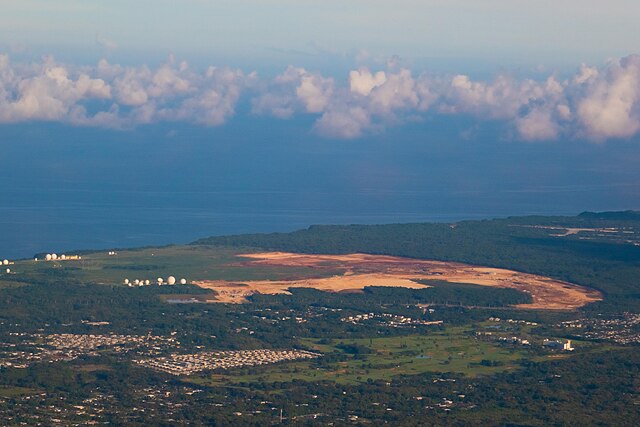
A federal judge in Guam has ordered the U.S. Navy to provide additional documentation related to environmental protections at a new Marine Corps base amid ongoing litigation under the Endangered Species Act.
U.S. District Judge Frances Tydingco-Gatewood on Dec. 12 denied the Navy’s attempt to limit evidence to materials created before 2017. The court ruled that environmental groups are entitled to access more recent records, including those that may show ongoing impacts.
The lawsuit, filed in 2023 by the Center for Biological Diversity and Prutehi Litekyan: Save Ritidian—now operating as Prutehi Guahan—alleges that the Navy and the U.S. Fish and Wildlife Service have not done enough to protect over a dozen endangered and threatened species during construction of Marine Corps Base Camp Blaz in northern Guam.
The groups argue the project, a key part of relocating Marines from Okinawa to Guam, has caused significant habitat disruption, including destruction of limestone forests. The base spans more than 4,000 acres and is expected to house about 5,000 Marines.
According to an amended complaint filed Dec. 12, the plaintiffs claim the federal agencies failed “to protect and conserve more than a dozen endangered and threatened species at imminent risk of extinction on Guam.” They also allege that promised mitigation steps, such as invasive species control and habitat restoration, have not been implemented.
The Navy and Fish and Wildlife Service have denied the allegations.
In the latest ruling, the court determined that since the plaintiffs are seeking to assess potential ongoing violations, relevant evidence cannot be limited to past administrative records. The parties were ordered to develop a discovery plan within 30 days.
“For too long, our island has been treated as a sacrifice zone,” said Leevin Camacho, attorney for Prutehi Guahan, in a Dec. 18 statement. “This ruling affirms that the military does not get a free pass just because it operates behind fences.” Camacho did not respond to an email for further comment sent Tuesday evening.
The construction of Camp Blaz, along with a separate $8 billion missile defense project at 16 sites across the island, has drawn criticism from local residents and environmental groups concerned about ecological impacts.