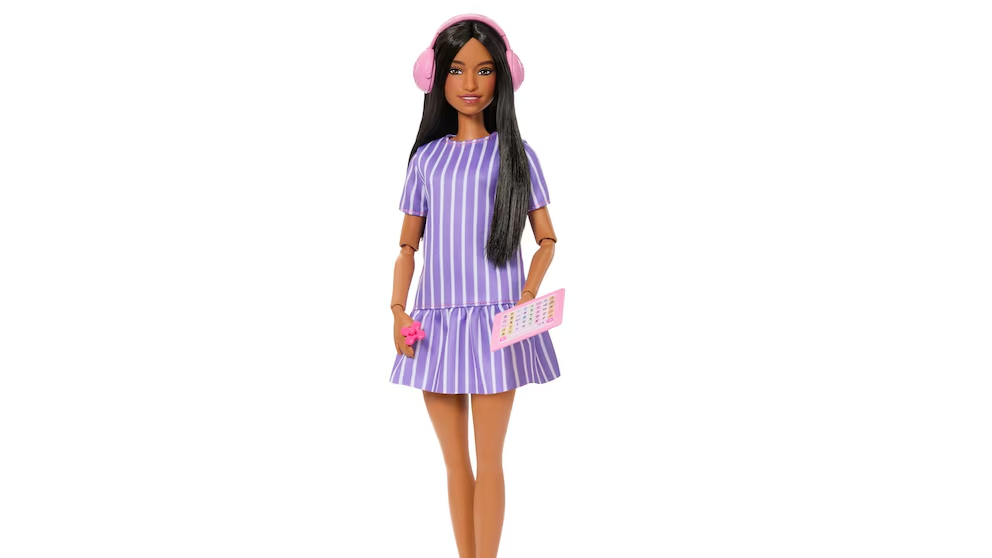
Mattel Inc. is launching an autistic Barbie, adding to its line of dolls designed to reflect a range of disabilities and physical traits.
The new Barbie joins the Fashionistas collection, which includes dolls with Down syndrome, hearing aids, vitiligo, a prosthetic leg, and various body types, skin tones, and hair textures.
The company developed the autistic Barbie over 18 months in partnership with the Autistic Self Advocacy Network, a nonprofit that promotes representation of people with autism in media. The goal, according to a company statement, was to reflect how some autistic individuals may experience the world.
“Autism doesn’t look any one way,” said Noor Pervez, the advocacy network’s community engagement manager who helped design the prototype. “But we can try and show some of the ways that autism expresses itself.”
The Barbie features eyes that glance slightly to the side, representing how some autistic people may avoid direct eye contact, according to Mattel. Articulated elbows and wrists allow for movements such as hand flapping and other gestures that can help manage sensory input or express emotions.
Clothing and accessories were also selected with sensory sensitivity in mind. The doll wears a loose-fitting, short-sleeved A-line dress with a flowy skirt and flat shoes, which Mattel said was chosen for comfort and mobility.
Each doll includes accessories such as a pink fidget spinner, noise-canceling headphones, and a tablet designed to resemble assisted communication devices used by some nonverbal individuals.
The autistic Barbie also features facial characteristics inspired by Mattel employees in India and design references to women of Indian backgrounds. Pervez noted the importance of representing autistic individuals from underrepresented communities.
Mattel introduced its first doll with Down syndrome in 2023 and later released a Barbie with Type 1 diabetes. The Fashionistas line includes diverse features meant to reflect more children’s lived experiences.
“Barbie has always strived to reflect the world kids see and the possibilities they imagine,” said Jamie Cygielman, Mattel’s global head of dolls. “We’re proud to introduce our first autistic Barbie as part of that ongoing work.”
The new doll will be available online and at Target starting Monday for a suggested price of $11.87, with Walmart expected to begin sales in March, Mattel said.
The Centers for Disease Control and Prevention (CDC) estimated in 2023 that 1 in 31 8-year-old children in the U.S. had autism. The CDC report found that diagnosis rates were higher among boys and among Black, Hispanic, Asian, and Pacific Islander children compared to white children.