The Del Mar Gate and Las Pulgas Gate will reopen tomorrow, Monday, Jan. 05, 2026 at 0600.
Basilone Road, from San Mateo Road to Meadowlark Drive, remains closed due to severe damage.

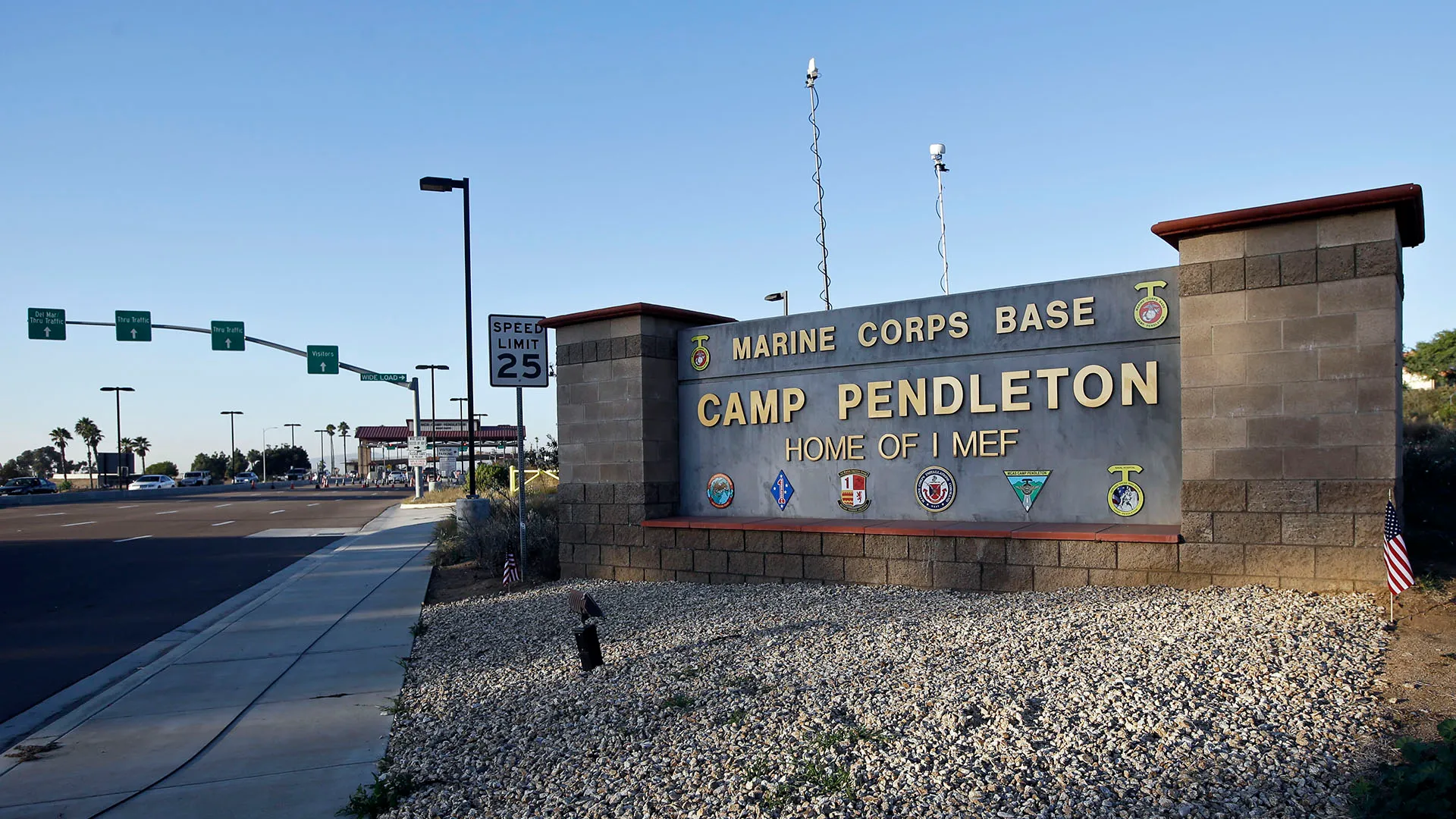
The Del Mar Gate and Las Pulgas Gate will reopen tomorrow, Monday, Jan. 05, 2026 at 0600.
Basilone Road, from San Mateo Road to Meadowlark Drive, remains closed due to severe damage.
A federal ruling will allow some Virginians with felony convictions to register to vote starting June 1.
Full story +
A federal court ruling this year found that Virginia’s rights-restoration process violated Civil War-era laws, clearing the way for people with felony convictions to vote in congressional elections this fall.
The court ruled that Virginia’s disenfranchisement of people with felony convictions violated the Readmission Acts, laws that required former Confederate states to guarantee voting rights for newly emancipated Black residents. The laws barred states from constitutionally disenfranchising people except for crimes considered common law at the time.
Under current Virginia law, people with felony convictions lost voting rights unless a governor restored them. A judge had set a May 1 deadline for state officials to ensure many modern crimes no longer trigger disenfranchisement. A joint filing last week by King’s lawyers and the office of Attorney General Jay Jones extended that deadline to June 1.
“We are committed to working with the Commonwealth to implement this historic expansion of voting rights and ensure newly eligible voters know their rights have been restored,” said American Civil Liberties Union attorney Vishal Agraharkar. “It’s past time for us to finally and formally right this wrong.”
The lawsuit at the center of the trial challenged former Republican Gov. Glenn Youngkin’s change to a petition-based restoration process. Two previous governors had streamlined the process, and restoration numbers fell during Youngkin’s tenure.
Lawmakers also advanced a constitutional amendment to provide automatic restoration of voting rights. After passing the Legislature in two consecutive years, it will appear on the statewide ballot in November.
When Gov. Abigail Spanberger signed the measure to place the amendment on the ballot earlier this year, she said: “When Virginians have paid their debt to society, they deserve to regain their right to vote.”
As state agencies define which crimes may qualify or disqualify people under the ruling, June 1 will be the first day some can register without a governor’s approval.
A lawsuit in Tazewell County challenged Virginia’s ballot wording for a proposed reproductive freedom amendment.
Full story +
A legal group filed a lawsuit in Tazewell County Circuit Court challenging the ballot language for Virginia’s proposed constitutional amendment on reproductive freedom, arguing it is misleading and violates state law.
The lawsuit was filed by the Founding Freedoms Law Center, part of The Family Foundation of Virginia, on behalf of the Association of American Physicians and Surgeons, the Virginia Medical Freedom Alliance, and Meagan Kade, a Tazewell County resident and Bluefield Town Council member.
The complaint named the Virginia State Board of Elections, the Virginia Department of Elections, Clerk of the Virginia House of Delegates G. Paul Nardo, Tazewell County Circuit Court Clerk Charity D. Hurst, and the county’s general registrar as defendants.
At issue is ballot language approved by the General Assembly through House Bill 781 and Senate Bill 449 for a November vote on whether to amend the Virginia Constitution to establish a right to reproductive freedom.
The ballot question asks whether the constitution should be amended to protect personal decisions about prenatal care, childbirth, postpartum care, birth control, abortion, miscarriage management, and fertility care; protect doctors, nurses, and patients from punishment for those decisions; and allow restrictions on abortion in the third trimester except when the patient’s health is at risk or the pregnancy cannot survive.
Attorneys for the plaintiffs said the question does not meet legal requirements that constitutional amendments be presented clearly and neutrally, and omits details about how the amendment could affect existing Virginia law.
According to the complaint, the amendment could affect laws governing abortion and reproductive care, including parental consent requirements for minors, provider licensing and safety standards, and restrictions on late-term abortions, depending on how courts interpret the language.
If approved, the amendment would add constitutional protections for decisions related to reproductive care, including abortion, contraception, and miscarriage management, while allowing some restrictions later in pregnancy under certain conditions.
Plaintiffs sought a declaratory judgment that the ballot language is unconstitutional and an injunction that could prevent certification of the amendment if it is approved under the current wording.
American Reproductive Centers aims to finish its rebuilt Palm Springs clinic by Dec. 31 after a 2025 bombing destroyed the original site.
Full story +
American Reproductive Centers broke ground Monday on a new fertility clinic and surgical center in Palm Springs, nearly a year after a bombing destroyed its original facility.
Founder and Medical Director Dr. Maher Abdallah was joined at the ceremony by Palm Springs Mayor Naomi Soto, City Manager Scott Stiles, Fire Chief Paul Alvarado, and City Council members. He hoped construction would be completed by Dec. 31, with full operations beginning in 2027. Abdallah said the new facility will include a new IVF lab, expanded patient services, and added safety and security infrastructure.
Since the bombing, the clinic has operated from the El Mirador building, where space has limited services, Abdallah said.
A key focus since the bombing has been the embryos stored at the clinic. First responders restored electricity after the blast, preserving frozen eggs, sperm, and embryos.
Abdallah said the clinic has thawed 60 frozen embryos that survived the blast, and 40 transfers resulted in pregnancies.
South Carolina senators restored earmarked funding for local governments, but left nonprofits out of their budget plan.
Full story +
The South Carolina budget this year once again included earmarked funds after a one-year pause.
The Senate budget, which passed last month, included $130.4 million in legislator-requested spending within a $15.3 billion plan. The money went to cities and counties for 163 projects, including parks, water and sewer work, and police and fire improvements. The spending plan did not include funding for nonprofits
Budget leaders in both chambers paused earmarked funding last year, citing rising spending and a push for a tax cut.
The Senate’s proposal included three $5 million projects: upgrades to Greenville’s Bon Secours Wellness Arena and nearby areas, planning for Columbia’s proposed riverfront park, and improvements at a career and technical education school in Spartanburg.
Bon Secours also received a $5 million earmark two years ago, sponsored by House Ways and Means Chairman Bruce Bannister, R-Greenville. The local agency that operates the 15,500-seat arena wants to expand and renovate it at an estimated cost of $282 million, including an outdoor amphitheater, a new entrance and lobby, and more parking. Most of that funding would come from local tax dollars, according to the master plan.
For Columbia’s riverfront, Sen. Ronnie Cromer, R-Prosperity, said the $5 million would likely fund planning for development along the Congaree River, including a public park on nearly 100 acres donated to the city. Sen. Darrell Jackson, D-Hopkins, also sponsored the request.
“Columbia’s not a destination city,” Cromer said. “But once we get this riverfront development done, it will be.”
Cromer also proposed smaller projects, including $787,000 to combine emergency services in Newberry County and $500,000 to help Whitmire replace a water main that burst earlier this year.
Sen. Russell Ott, D-St. Matthews, said smaller towns often lack the tax base for costly infrastructure. His requests included $1 million for drainage improvements in Cayce to match a federal grant and $563,000 for sewer upgrades in Calhoun County.
“It does highlight the critical need for infrastructure across our state,” Ott said. “We are just woefully behind in a lot of our areas.”
Senate Majority Leader Shane Massey, R-Edgefield, said he would prefer no earmarks, but if they continue, he supports directing money to cities and counties rather than nonprofits because of public oversight requirements.
Whether the House will include nonprofit earmarked funds remained unclear. House members were expected to add projects to their budget draft this week before lawmakers negotiate a final spending plan that takes effect July 1.
“Our investigation found that State Farm delayed, underpaid, and buried policyholders in red tape at the worst moment of their lives,” the Insurance Commissioner said.
Full story +
California insurance regulators said Friday they were seeking to suspend State Farm’s license for up to a year and impose millions of dollars in penalties, alleging the insurer mishandled wildfire claims in Los Angeles County after the Jan. 7, 2025, fires.
The Department of Insurance said it filed an administrative action against State Farm General, California’s largest home insurer, after a market conduct exam of 220 sample claims found 398 alleged violations of state law in about half the claims reviewed.
Department spokesperson Michael Soller said the action could result in State Farm losing its certificate of authority for up to a year, which would prevent it from writing policies during that period.
State Farm has handled about 11,300 residential claims, or nearly one-third of those filed after the fires, which damaged or destroyed more than 16,000 homes and killed 31 people.
The department launched the exam in June 2025 after complaints from fire victims in Pacific Palisades, Altadena, and nearby communities. The exam results, released Friday, said the company in some cases failed to conduct a “thorough, fair and objective investigation,” failed to reach “prompt, fair, and equitable settlements,” and made settlement offers that were “unreasonably low.”
The filing also alleged State Farm failed to respond to claims on time, provide a factual or legal basis for denials, or assign a primary point of contact after moving policyholders among three or more adjusters in six months. It also cited alleged problems handling smoke-damage claims, including denials of payments for hygienic toxin testing.
The company denied some allegations, admitted others, and often attributed problems to specific adjusters. It also said it held meetings with adjusters after learning of the alleged violations.
Each alleged violation carries a fine of up to $5,000, or up to $10,000 if found to be willful. The case will be heard by a state administrative law judge.
The department said the total penalties could reach millions of dollars.
State Farm said it had paid more than $5.7 billion to fire victims and, in an April 22 statement, outlined five commitments to policyholders, including single points of contact and improved communication.
Lexington police said a 17-year-old was taken at gunpoint Sunday night and asked the public for help locating him.
Full story +
Lexington police were searching for a 17-year-old who authorities said was taken at gunpoint Sunday night.
Corvin Gardner of Lexington was forced from his home on Hendrix Street at about 10 p.m. by two unidentified males armed with handguns, the Lexington Police Department said Monday in a news release.
Witnesses saw Gardner and the two suspects walking west from Hendrix Street toward Barr Road, according to police. Investigators said they believed the group got into a vehicle and left the area.
Police did not disclose a motive.
Gardner was described as 5 feet 8 inches tall and 118 pounds, with black hair, brown eyes, and a large tattoo on his right forearm.
An Amber Alert had not been issued because police did not have vehicle information, which is required under the alert guidelines.
Anyone with information about Gardner was asked to contact Lexington police at 803-358-1557 or kheath@lexsc.gov. Tips can also be submitted to CrimeStoppers at 888-CRIME-SC or online. In an emergency, call 911.
The claims include a $1.2 million reimbursement to the federal government for fraudulent activity in COVID-19 Emergency Rental Assistance programs, two wrongful conviction settlements, two prisoner death cases, and two school sexual assault cases.
Full story +
Hawaii is preparing to pay $20.4 million this year to settle 36 legal claims listed in House Bill 2250, pending final legislative approval expected by Friday.
The largest proposed payment is $8 million to settle an administrative case involving the state Department of Education. In 2023, a state hearings officer ruled that a severely disabled public school student was owed two years of compensatory education after receiving inconsistent special education and related services since 2018. The student’s parents said the failures severely harmed their child.
This year’s proposed total is up from $9.5 million for 38 claims in 2025. The state paid $18.1 million for 41 claims in 2024 and $25.7 million for 35 claims in 2023.
Lawmakers questioned several items, including a proposed $151,132 payment to settle a U.S. Environmental Protection Agency fine against the Department of Agriculture and Biosecurity over a large-capacity cesspool on state land in Waimanalo. The Senate Judiciary Committee removed that appropriation.
The state agreed to pay $600,000 in the case of Alvin F. Jardine III, whose 1992 conviction was vacated in 2011 after DNA testing. Jardine had sought $1 million under a state compensation law after spending about 20 years in prison. The state also proposed $420,833 for Roynes J. Dural II, whose 2003 sexual assault conviction was vacated in 2018 after he had spent eight years in prison. The Department of the Attorney General said both amounts were part of fully executed settlement agreements.
The bill also included $200,000 to settle a case brought by Joshua Spriestersbach, who spent more than two years in Hawaii State Hospital after being mistakenly identified as another man.
Other proposed payments included $800,000 over the 2023 suicide of Oahu Community Correctional Center detainee Jimuel Gatioan, $600,000 over the 2022 death of Halawa inmate Brian O’Gorman, $500,000 in a McKinley High School sexual assault lawsuit, $400,000 in a Campbell High School assault case, and $743,575 for 13 claims involving outdated, lost, or misplaced state checks.
The bill said it could reduce the need for law enforcement agencies to monitor high-risk intersections. Critics of red-light cameras have argued they raise due process and privacy concerns and can increase rear-end collisions.
Full story +
Red-light cameras are illegal in South Carolina, but a bill introduced April 28 would allow local governments to use them to issue civil fines for traffic violations.
House Bill 5600, introduced by Reps. Weston Newton, Bill Herbkersman, and Jay Jordan, all Republicans, would let town, city, and county governments adopt ordinances allowing traffic-control signal monitoring systems at intersections.
The bill also would require drivers facing a steady yellow light to “slow down immediately” if it is safe to do so.
Under the proposal, fines could not exceed $100 and could not include court costs, assessments, or surcharges. Violations would not add points to a driver’s license or affect a driving record.
If a local government adopted such an ordinance, the enforcing agency would have to mail a citation within one week of the violation. The citation would have to include the registered owner’s name and address, the vehicle registration number, the alleged violation, the intersection location, the date and time, recorded images, a statement that the images are evidence of a violation, and the amount of the civil penalty.
Drivers could contest citations by showing they entered the intersection to yield to an emergency vehicle or as part of a funeral procession. If a vehicle or license plate was stolen, the owner would have to show that a police report was filed before the violation occurred.
Current South Carolina law bars law enforcement agencies from using traffic cameras, including speed cameras and red-light cameras, to issue tickets. Private communities that handle their own traffic enforcement may use traffic cameras.
According to the Governors Highway Safety Association, nine states have laws prohibiting red-light cameras.
The project would improve emergency preparedness if Port of Hilo became inoperable, shifting Hawaii island’s ocean freight, which includes more than 90% of the island’s food and 95% of its fuel, to Kawaihae.
Full story +
Hawaii’s Department of Transportation plans to begin a more than $50 million upgrade of Kawaihae Harbor next year, including widening Kawaihae Road to add an 875-foot dedicated left-turn and storage lane near the harbor entrance.
According to a draft environmental assessment that anticipated a finding of no significant impact, the project is intended to reduce traffic backups by allowing through-traffic to bypass cargo trucks waiting to enter the harbor.
The work also will add 2.3 acres of cargo yard storage, replace damaged pavement with reinforced concrete, upgrade light poles and fire suppression systems, widen the main gate, and relocate utility poles, fencing, and office and maintenance buildings.
The department said congestion, limited container storage, and aging infrastructure have reduced reliability and efficiency at the harbor. Backups on Kawaihae Road can stretch more than a mile, past the intersection with Queen Ka‘ahumanu Highway, or Highway 19, causing delays for nearby residents, businesses, schools, and beach parks.
The department said final design and bidding will take place this summer. It expects to award the contract early next year, with groundbreaking tentatively set for mid-2027. Construction is expected to take about 24 months and finish by mid-2029.
Shipping container volumes at Kawaihae have risen nearly 75% over the past decade, according to the department, as demand grew and some deliveries shifted from Hilo.
An Oahu grand jury indicted a Honolulu police officer on felony and misdemeanor charges tied to an alleged on-duty sexual assault.
Full story +
A 26-year-old Honolulu police officer was indicted Tuesday on multiple charges in the alleged sexual assault of a woman while he was on duty April 6 and 7.
An Oahu grand jury in state court indicted Christopher John A. Oallesma on counts of official misconduct, obstruction of justice, use of a computer in the commission of a separate crime, four counts of third-degree sexual assault, and four counts of fourth-degree sexual assault.
Oallesma, a Waikiki patrol officer, was scheduled to be arraigned Wednesday in Circuit Court and enter a plea. He was arrested shortly before 4 p.m. Tuesday at Honolulu Police Department headquarters and released about an hour later after posting $150,000 bail.
The indictment said the woman had been “stopped by a law enforcement officer,” but it did not say whether Oallesma initiated the stop or another officer did.
According to the indictment, Oallesma sexually assaulted the woman by placing his hand on her genitals and breast while performing an unlawful search. It also alleged that he placed his mouth on her breast and caused her to place her hand on his penis.
The indictment said he subjected the woman to sexual contact “by compulsion and/or induced duress.” It defined compulsion as lack of consent or an expressed or implied threat that places a person in fear of public humiliation, property damage, or financial loss.
Prosecutors said they intended to seek an extended prison term if Oallesma was convicted of two or more felonies. Third-degree sexual assault, official misconduct, and use of a computer in the commission of a separate crime are Class C felonies. Obstruction of justice is a Class B felony. Fourth-degree sexual assault is a misdemeanor.
The indictment alleged that in Counts 1 and 2, Oallesma acted “pursuant to one continuous scheme and course of conduct” during April 6 and 7.
Oallesma had five years of service with the Honolulu Police Department and was assigned to District 6 Patrol, which covers Waikiki. Police officials said they had restricted his police powers.
A court barred Oallesma from contacting the woman and four named witnesses. He was also prohibited from possessing firearms and ordered to turn over any firearms and ammunition to the main police station.
Acting Honolulu Police Chief Rade Vanic said in a written statement, “The allegations in this case are very serious and run counter to the high standards HPD sets for its officers in serving and protecting our community.
“An internal investigation was initiated promptly and remains ongoing, and any officer who is accused of breaking the law is subject to the same legal process as any member of the public. These allegations do not reflect the many dedicated officers who serve our community honorably each day.”