
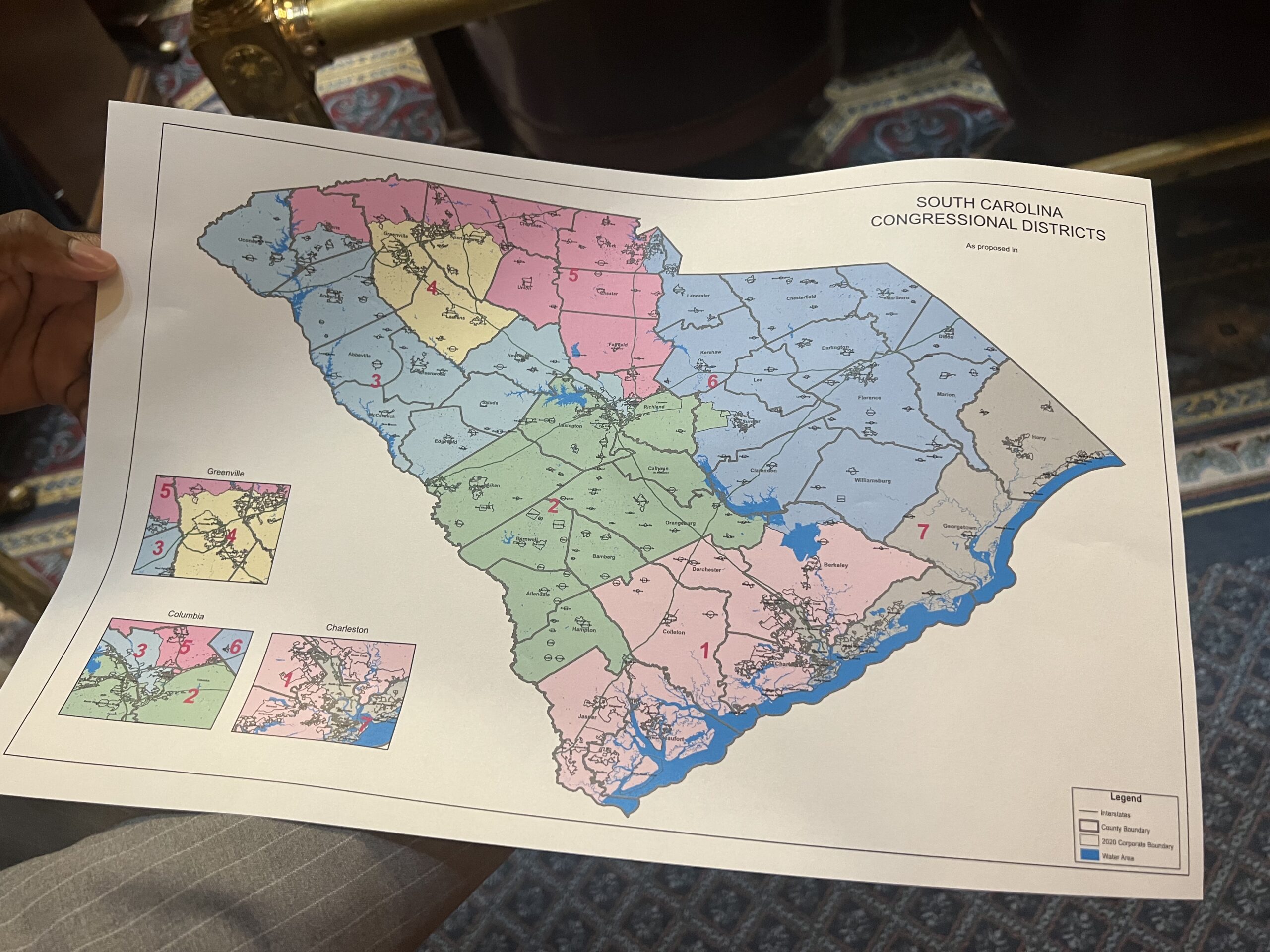
The South Carolina Senate began debating a bill redrawing the state’s congressional districts on Thursday, after the state’s elections director told lawmakers a second set of primaries would cost $5 million to $6 million, not including county expenses.
The Senate Judiciary Committee voted 15-7 on Wednesday to send the map to the full Senate. The proposal would redraw the state’s seven U.S. House districts, including the 6th District now represented by Democrat Jim Clyburn. Sen. Chip Campsen, R-Isle of Palms, was the only Republican to vote no.
The vote followed about seven hours of testimony, including updated estimates from State Elections Director Conway Belangia. He said earlier projections were informal and rose after the State Election Commission reviewed past election costs, especially poll worker pay.
The committee vote came a day after the House approved the map and moved congressional primaries to Aug. 18. Primaries for other offices would remain in June.
Belangia called running an additional statewide primary and likely runoffs a “monumental task.”
Under federal law, military and overseas ballots must be mailed at least 45 days before an election. Candidate filing for an August congressional primary would run June 1-5, and ballots would need to go out by July 4, Belangia said.
Election officials also would need to reprogram and test voting machines after the June 23 primary runoffs. Under the proposed map, 43 precincts would contain voters from multiple congressional districts, requiring manual data entry. Twenty of those precincts are in Richland County.
Richland County Elections Director Travis Alexander said the county lacks funding and staffing for the added work. He estimated an extra congressional primary and runoff would cost the county about $800,000.
Among about 70 people who testified, most spoke against the proposal. Witnesses included election workers, Mount Pleasant Mayor Will Haynie, an independent candidate who said his 4,000 petition signatures would be invalidated, people with disabilities, and Walter Clyburn Reed, Clyburn’s grandson.
Supporters said the 6th District should be “un-gerrymandered.” Opponents noted the U.S. Supreme Court ruled in 2024 that South Carolina’s current map was a partisan gerrymander, not a racial one.
Only four people testified in support. Sen. Matt Leber, R-Johns Island, said they reflected a “silent majority.”