
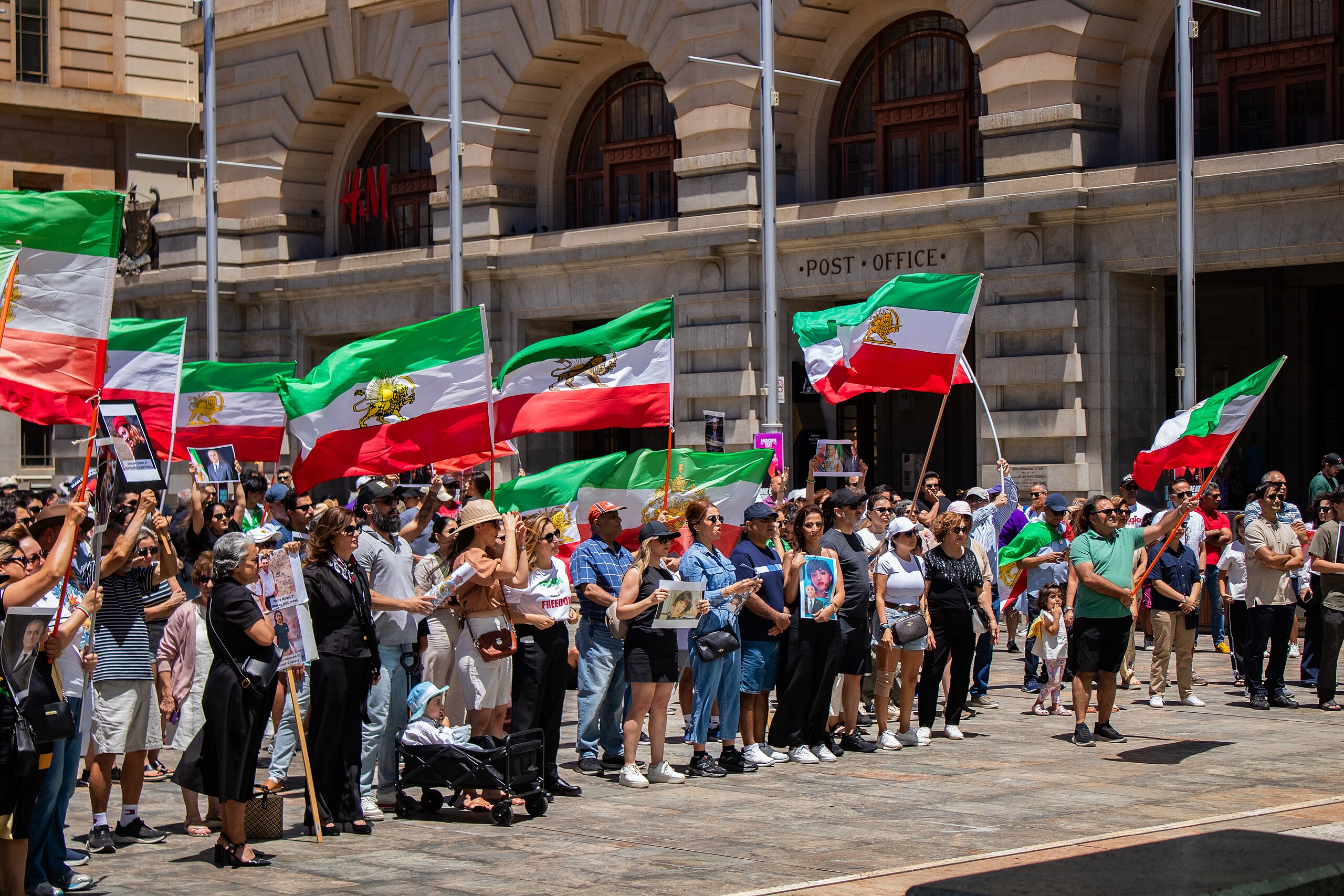
The European Union on Thursday designated Iran’s paramilitary Revolutionary Guard as a terrorist organization in response to Tehran’s response to recent protests, the bloc’s top diplomat said.
EU foreign policy chief Kaja Kallas announced the move on X, formerly Twitter, adding that foreign ministers had unanimously approved the decision. “Any regime that kills thousands of its own people is working toward its own demise,” she said.
“This will put them on the same footing with al-Qaida, Hamas, Daesh,” Kallas added, using an Arabic acronym for the Islamic State group. “If you act as a terrorist, you should also be treated as a terrorist.”
The 27-nation bloc also imposed sanctions on 15 Iranian officials, including senior commanders of the Revolutionary Guard, in connection with the Iranian government’s suppression of protests. The U.S.-based Human Rights Activists News Agency has reported at least 6,373 deaths in recent weeks, including more than 5,900 protesters and 113 children.
The designations are primarily symbolic but increase international pressure on Iran, which already faces multiple rounds of sanctions from the U.S., the United Kingdom, and others. The Revolutionary Guard has significant military and economic influence within Iran.
Iran has not officially responded to the EU’s action but previously criticized European countries for considering the designation. The United States and Canada already list the Guard as a terrorist organization.
France, which initially expressed concerns over the risk to its citizens detained in Iran, later supported the listing. French Foreign Minister Jean-Noël Barrot said France backed additional sanctions and the designation, stating, “There can be no impunity for the crimes committed.”
Kristina Kausch, deputy director at the German Marshall Fund, described the action as “a symbolic act” that reflects a shift from dialogue to a strategy of isolation. She said the designation of a state military branch as a terrorist group is “one step short of cutting diplomatic ties.”
Alongside the listings, the EU also sanctioned six Iranian organizations, including those involved in internet surveillance. Internet access in Iran has been severely restricted in recent weeks.
Impacted individuals and groups face asset freezes and travel bans within the bloc. Because the Guard holds extensive business interests in Iran, the sanctions could affect any assets held in Europe.
Against the backdrop of sanctions, Iran’s currency fell to a record low of 1.6 million rials to the dollar on Thursday. Economic strain has fueled unrest that broadened into opposition to the country’s governing system.
Formed after the 1979 Islamic Revolution, the Revolutionary Guard was tasked with protecting the country’s clerical leadership and has since gained political, military, and commercial power. Its Basij unit is believed to have played a central role in controlling recent protests.
Sanctioning the Guard is complex, as many young Iranian men are conscripted into it as part of mandatory military service.
Iran also issued a maritime warning Thursday, announcing plans for live-fire naval drills in the Strait of Hormuz on Sunday and Monday. Two Pakistani officials verified the notice, though Iran has not acknowledged the drill publicly. The Strait handles 20% of global oil shipments.
The hardline Iranian newspaper Keyhan said any move against Iran could trigger a response that would close the strait and target U.S. forces. U.S. military officials did not respond to requests for comment on the warning.
Also Thursday, the mayor of Tehran said the city plans to build bomb shelters and install air-raid sirens, though described the effort as a long-term project.
Meanwhile, opposition figure Mir Hossein Mousavi renewed calls for a referendum on constitutional reform. A previous effort did not gain traction.
Iran’s government has said 3,117 people have died in recent protests, including 2,427 civilians and security personnel, and referred to others killed as “terrorists.” Past government estimates often underreport fatalities.